If you've spent any time on social media, watched the news, or talked with friends and family lately, you've probably heard about GLP-1 medications. These prescription medications have become increasingly common for managing type 2 diabetes and supporting weight loss in appropriate patients.
These medications have helped many people improve their health, but they're not a magic solution. While GLP-1 medications can be an effective tool, lasting success comes from combining medication with healthy lifestyle habits. Good nutrition, regular physical activity, adequate sleep, and ongoing support all play an important role in helping people achieve and maintain their health goals.
At Phelps Memorial, we believe education is just as important as medication. Understanding how GLP-1 medications work, how to fuel your body, and how to build healthy habits can help you get the most from your treatment while supporting your overall health and well-being.
What Are GLP-1 Medications?
GLP-1 receptor agonists are prescription medications that mimic the effects of a naturally occurring hormone in your body. They can help regulate blood sugar, slow the rate at which food leaves the stomach, and increase feelings of fullness, which may help reduce appetite.
Depending on your individual health needs, GLP-1 medications may be prescribed to:
- Support healthy weight loss
- Improve blood sugar management for people with type 2 diabetes
- Help manage obesity
- Reduce the risk of certain obesity-related health conditions
These medications are not appropriate for everyone. Your healthcare provider can help determine whether a GLP-1 medication is right for you based on your medical history, current health conditions, and treatment goals.
Who May Benefit from a GLP-1 Medication?
GLP-1 medications may be recommended for adults living with obesity, individuals who are overweight and have certain health conditions, or people with type 2 diabetes who may benefit from improved blood sugar control.
If you're considering a GLP-1 medication for weight management, start by talking with your primary care provider. Together, you can discuss your health history, goals, and whether this treatment option is appropriate for you.
Why Nutrition Matters Even More While Taking a GLP-1
One of the common effects of GLP-1 medications is a decreased appetite. While eating less may contribute to weight loss, it can also make it more difficult to consume the nutrients your body needs.
Without careful planning, some people may unintentionally eat too little protein, skip meals, or fall short on important vitamins and minerals. Over time, this can contribute to muscle loss, fatigue, low energy levels, and nutritional deficiencies.
That's why nutrition remains one of the most important parts of your weight-loss journey.
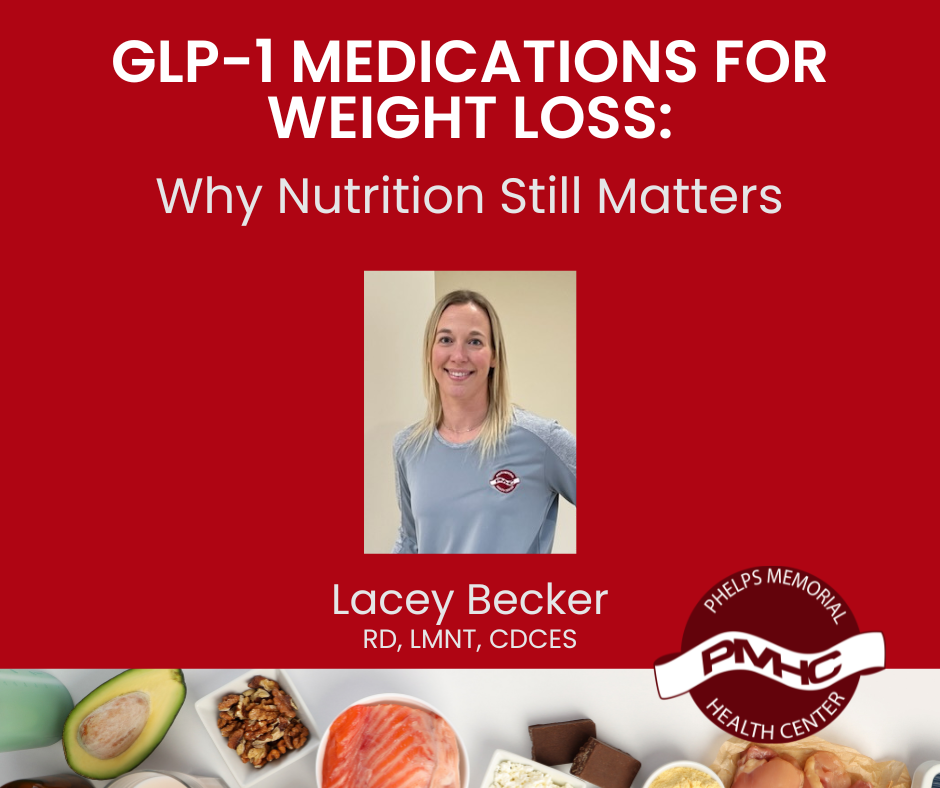
Lacey Becker, Phelps Memorial Registered Dietitian, says: “A smaller appetite requires smarter choices. Protein protects muscle, fiber supports gut health and satiety, and vitamins and minerals keep your body functioning at its best.”
Prioritize Protein
Protein is one of the most important nutrients to focus on while taking a GLP-1 medication.
Getting enough protein can help:
- Preserve lean muscle mass during weight loss
- Support strength and mobility
- Promote healing and recovery
- Help you stay satisfied between meals
Try to include a quality source of protein with every meal or snack.
Examples include:
- Chicken or turkey
- Fish
- Eggs
- Greek yogurt
- Cottage cheese
- Beans and lentils
- Nuts and seeds
- Protein shakes, when recommended by your healthcare team
Stay Hydrated
Some people experience nausea, constipation, or other digestive changes when starting a GLP-1 medication. Drinking enough water throughout the day can help support digestion and overall health.
Simple ways to stay hydrated include:
- Carry a reusable water bottle.
- Sip water throughout the day instead of waiting until you're thirsty.
- Choose water more often than sugary drinks.
- Increase fluids during hot weather or physical activity.
Don't Forget Fiber
Fiber is another important part of a balanced eating plan. It supports digestive health, helps you feel full, and may help with constipation, which can occur for some people taking GLP-1 medications.
Fiber-rich foods include:
- Fruits
- Vegetables
- Whole grains
- Beans
- Lentils
Increase fiber gradually and be sure to drink plenty of water to help your digestive system adjust.
Common Mistakes to Avoid
Every person's experience with GLP-1 medications is different, but there are several common habits that can make it harder to support your overall health and nutrition goals.
Skipping Meals
Even if you're not hungry, your body still needs nutrients. Eating regular, balanced meals can help prevent fatigue and ensure you're getting enough protein and essential vitamins.
Not Eating Enough Protein
Weight loss can include both body fat and muscle. Prioritizing protein can help preserve lean muscle mass and support long-term strength.
Not Drinking Enough Water
Reduced appetite sometimes means people drink less as well. Staying hydrated is important for digestion, energy, and overall health.
Expecting Medication to Do All the Work
GLP-1 medications are a tool—not a replacement for healthy habits. Building a routine that includes nutritious eating, regular movement, and follow-up care is key to supporting long-term success.
Healthy Habits That Support Long-Term Success
Medication can help support the journey, but healthy habits are an important part of sustaining your progress.
Some of the most important habits include:
- Eating balanced meals with protein, fiber, and healthy fats
- Staying hydrated throughout the day
- Participating in strength training to help preserve muscle
- Walking or engaging in regular physical activity
- Getting adequate sleep
- Keeping follow-up appointments with your healthcare team
Becker advises: “Think of a GLP-1 as a tool—not the foundation. The true foundation of long-term health is built with balanced nutrition, regular exercise, and sustainable habits.”
It's About More Than Weight Loss
Although weight loss is often one of the most noticeable results of GLP-1 therapy, improving your overall health goes far beyond the number on the scale.
Healthy lifestyle changes may also contribute to:
- Better blood sugar management
- Improved heart health
- Increased energy
- Better mobility
- Reduced joint discomfort
- Greater confidence
- Improved quality of life
Focusing on your overall health—not just your weight—can help create meaningful, lasting change.
Frequently Asked Questions About GLP-1 Medications
Can you lose weight without changing your diet while taking a GLP-1 medication?
GLP-1 medications can reduce appetite and support weight loss, but healthy eating habits remain an important part of supporting your overall health. Choosing nutrient-rich foods helps your body get the nutrients it needs while working toward your health goals.
Why is protein so important while taking a GLP-1 medication?
Protein helps preserve lean muscle mass during weight loss, supports healing, promotes fullness, and helps maintain strength as your body changes.
Can you lose muscle while taking a GLP-1 medication?
Yes. Weight loss can include both body fat and muscle. Eating enough protein and participating in regular strength training may help preserve lean muscle mass.
What foods should you eat while taking a GLP-1 medication?
A balanced eating pattern may include lean proteins, fruits, vegetables, whole grains, healthy fats, and plenty of water. Your individual nutrition needs may vary, so talk with your healthcare provider or registered dietitian about what's right for you.
Will I need to take a GLP-1 medication long term?
How long someone uses a GLP-1 medication depends on their individual health needs, treatment goals, response to treatment, and healthcare provider's recommendations. Your provider can help you determine whether continuing, adjusting, or discontinuing medication is appropriate. Healthy eating, regular physical activity, and other sustainable lifestyle habits remain important throughout your health journey.
Looking Ahead
As more people explore GLP-1 medications as part of their health journey, Phelps Memorial is committed to growing alongside their needs. We're excited about what's ahead and look forward to sharing additional GLP-1 resources and educational opportunities in 2027.
If you're interested in learning whether a GLP-1 medication may be right for you, talk with your primary care provider. Be sure to check back for future articles, educational resources, and updates from Phelps Memorial as we continue to expand our health and wellness resources.
*This article is intended for educational purposes only and should not replace medical advice from your healthcare provider. Always consult your healthcare team regarding questions about medications, nutrition, or your individual health needs. If you to wish to discuss nutrition or lifestyle with changes with Lacey Becker, RD, LMNT, CDCES you can contact her at 308.995.2881.