Every person experiences labor differently. Our Obstetrics Department offers nitrous oxide (N₂O), sometimes called “laughing gas,” as an option to help provide comfort and reduce anxiety during labor and delivery. Nitrous oxide has been used for many years in maternity care and can give you another choice for managing the discomfort and emotions that can come with labor.
What Is Nitrous Oxide?
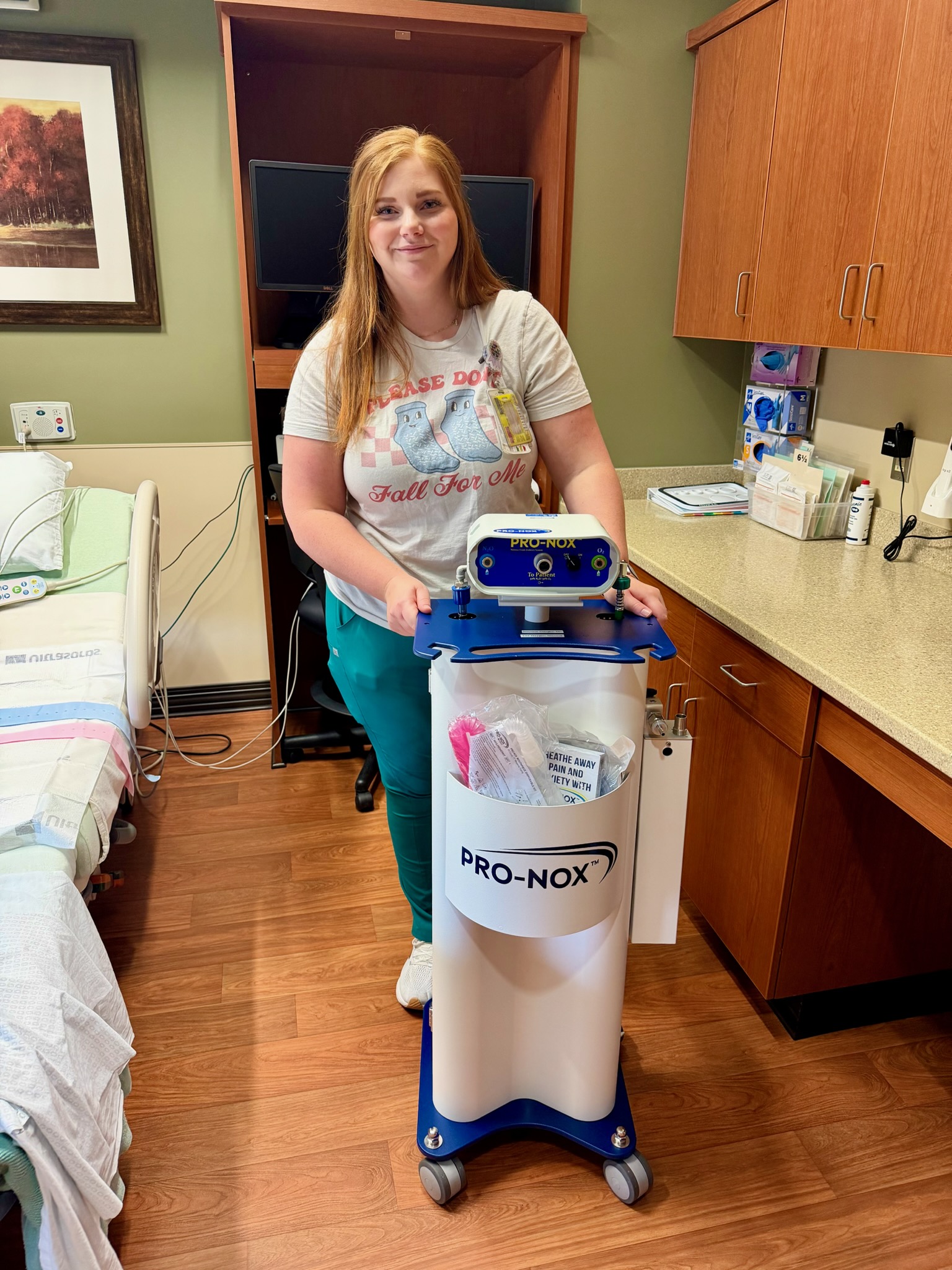
Nitrous oxide is a colorless, odorless gas that is mixed with oxygen and inhaled through a mask or mouthpiece. During labor, you hold the mask or mouthpiece yourself and breathe in the nitrous oxide when you feel you need it. It begins working quickly and leaves your body quickly after you stop breathing it.
What Can Nitrous Oxide Do?
Nitrous oxide may help:
- Decrease the perception of labor discomfort
- Reduce anxiety and tension
- Help you feel more relaxed during contractions
- Give you a greater sense of control during labor
- Provide an additional comfort option without requiring an injection or IV medication
Nitrous oxide does not completely eliminate labor pain. Instead, many patients describe it as making contractions feel more manageable or helping them cope with the intensity of labor.
One PMHC patient shared her experience using nitrous oxide during labor: “It worked really well to take the thought of pain away. I was able to get up and move and not feel doped up and groggy. I was able to be present in the process. I think it is a really great tool that you guys have brought in to help us.”
You Control When You Use It
One of the benefits of nitrous oxide is that you control when you use it. Your nurse will teach you how to use the equipment. You can begin breathing the nitrous oxide shortly before a contraction and stop when the contraction has passed. Because it works and wears off quickly, you can use it as needed during labor, according to your care plan and provider's recommendations.
Will I Be Awake?
Yes. Nitrous oxide is intended to provide comfort while allowing you to remain awake and able to participate in your labor experience.You may feel relaxed, lightheaded, warm, or slightly dizzy while using it. These effects generally decrease quickly after you stop inhaling the gas. Your healthcare team will monitor you and your baby according to your individual clinical needs.
Is Nitrous Oxide Right for Everyone?
Nitrous oxide may not be appropriate for every patient. Your healthcare provider and nursing team will review your medical history, labor status, medications, and other factors to determine whether nitrous oxide is an appropriate option for you. Nitrous oxide may also be used along with other comfort measures, depending on your individual circumstances and your provider's orders.
A Choice for Your Birth Experience
There is no single right way to manage labor discomfort. Some people choose breathing and relaxation techniques, movement, positioning, water therapy, medication, nitrous oxide, an epidural, or a combination of options. Our goal is to provide you with information and choices so you can work with your healthcare team to develop a labor experience that is right for you. Talk with your provider or OB nurse during your pregnancy or when you arrive for delivery to learn more about whether nitrous oxide may be an option for you.
Ask Us About Nitrous Oxide
Have questions about your comfort options during labor? Ask your OB provider or nursing team.We are here to help you understand your choices and support you throughout your birth experience.