There are people whose presence changes a room the moment they walk in - not with noise or grand gestures, but with warmth. With steadiness. With the kind of compassion that makes others exhale because they feel safe. At Phelps Memorial Health Center, for patients who walk through the doors of oncology, that presence is often found in one person: Stacey VanBoening, APRN.
For years, Stacey has been the quiet anchor in a storm no one asks to face. She is the one who kneels beside patients during their hardest conversations. Who squeezes hands. Who notices the tremble, the fear, the breath that catches before someone asks a question they already know is going to hurt. Her work is clinical, yes - complex, technical, and demanding - but those who know her also know it’s her heart that sets her apart.
“I’ve walked alongside so many incredible people during their cancer journey,” Stacey says. “I’ve been their rock, their go-to, their shoulder to cry on, and the one there to meet them in celebration for all of the little wins.”
Her love for caring for others began early. At just 16, she worked as a CNA in a local nursing home. She learned quickly how much of a difference a loving heart makes. Later, she spent much of her nursing career in the ICU, building deep relationships with patients and families during extended stays. When the opportunity to serve as PMHC’s oncology nurse practitioner arose a few years after earning her APRN, she felt a clear pull - a merging of clinical skill, critical thinking, and the profound privilege of walking with people through the hardest days of their lives.
And for years, she did just that.
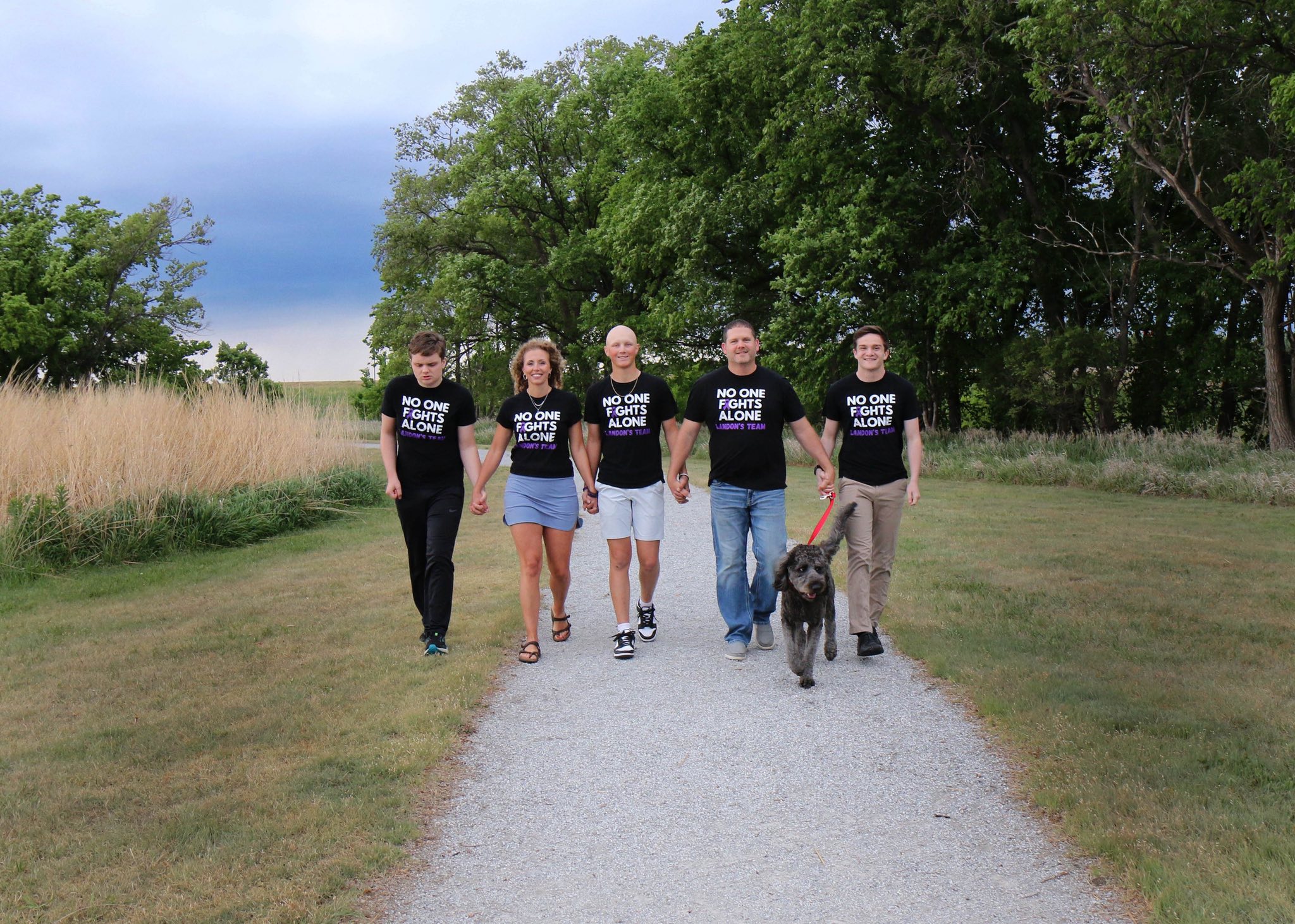
But in February 2025, Stacey crossed a line she had crossed with many families before - the moment marked forever as before and after. Only this time, it wasn’t her patient’s diagnosis. It was her son’s.
Through the fall and winter of Landon’s freshman year, something inside Stacey was whispering. A gut instinct, the same intuition she has taught countless nurses and providers to trust, kept tugging harder each week. Landon, a multi-sport athlete, wasn’t moving right. His back hurt badly. His frustration grew. And still, no one could quite put a finger on what was wrong.
Then came February 6.
It was a rare Friday evening with no basketball game. Stacey was at home folding laundry when Landon walked into the room.
“Mom, I think I have testicular torsion.”
It wasn’t the kind of comment most moms hear casually from their teenage sons. But Stacey’s medical mind kicked in immediately. She told him that if it were torsion, he would be doubled over in severe pain. That’s when he took a deep breath. A different kind of breath. A bracing one.
He told her his testicle had doubled in size over the past few weeks.
“My heart instantly sank,” Stacey remembers.
Before he came home, Landon had confided in his teammates, boys he’d grown up with since they were little. They gathered around him, researching symptoms on their phones and laptops, and came to the two possibilities no 14-year-old expects to see: torsion… or cancer. They urged him to tell his parents immediately. Their maturity and love, Stacey says, carried him then and have carried him ever since.
Stacey called his primary care provider, Katie Luthy, PA, scheduling the first available appointment on Monday morning. And then she broke down.
“I spend every day walking people through this,” she says. “But this felt so different. I have never felt so helpless in my life.”
Weekend hours stretched unbearably slow. At church that Sunday, Stacey cried in her husband Josh’s arms the entire service. Landon stayed home with worsening back pain. Their family, who had helped so many other families face cancer, was now living the same nightmare.
Monday brought answers, though not the kind they hoped for. After an ultrasound with Phelps Memorial’s radiology team, the call came at 10 a.m.
“Testicular cancer until confirmed otherwise.”
The words landed like a foreign language, even spoken in the oncology office where Stacey hears them every day. They pulled Landon from school at lunch to tell him. He met the news with a quiet strength - steady, stoic, ready to fight.
Within days, scans showed cancer had spread to the lymph nodes in his back and to his lungs. The following week, he underwent urgent surgery at Children’s Hospital, Omaha. Then came the waiting - more than two and a half weeks for pathology, weeks spent balancing hope and fear in equal measure.
They met with oncology. Chemotherapy was coming. And soon, Landon began five-day inpatient treatments repeated every three weeks, with additional chemo sessions on off-weeks.
And through it all, something powerful happened.
He received much of his chemotherapy at Phelps Memorial.
“The nurses cared for him and treated him as if he were their own son,” Stacey says. The reality that her own community, her own colleagues, were now caring for her child, was both humbling and healing.
The first 48 hours were agonizing. Tumors in his back responded angrily to the chemo. He was in excruciating pain. He was nauseated. He was exhausted.
“All I could do was hold him and pray,” Stacey says.
On day three, Landon stood up without pain.
Within hours of arriving home after a six-day hospital stay, he went to baseball practice and texted his mom that he could touch his toes for the first time in months.
The tears came then too. But they were different – they were tears of gratitude and answered prayer.
Throughout spring, Landon continued treatment while playing baseball whenever he wasn’t hospitalized. His determination, Stacey says, was “the most inspirational thing I have ever seen in my life."
In May, he completed chemotherapy. After a summer battling fungal pneumonia, he was declared cancer-free in August.
Stacey returned to her work in the oncology department with a new depth of understanding.
“One of the biggest things I appreciate differently now is the waiting,” she says. “I always knew it was hard, but now I know how painful it can be."
She laughs gently as she adds a truth all oncology families know too well: “Once cancer becomes part of your life, even a hangnail can spiral into worry.”
She has always been deeply empathetic. Patients say she is special - the kind of person you don’t forget. Now, that empathy has layers only lived experience can create.
“I feel like my relationship with patients is on another level,” she says. “I relate to them differently now, not just as a provider, but as someone who has lived it.”
At Landon’s very first oncology appointment, a social worker pulled him aside: He qualified for Make-A-Wish. She encouraged him to “dream big.” He did.
In November, the VanBoening family boarded a plane to Maui, the place Landon said looked most like the world of Moana. Their days there were filled with sun, laughter, gratitude, and the feeling of exhaling after holding their breath for far too long.
“It was the most incredible celebration of everything he had battled,” Stacey says. “And it was a time of healing for our whole family.”
Stacey carries a message now - one shaped by faith, by discovery, by the love of a community, and by the unimaginable strength of her son.
“Lean in on your faith,” she says. “Appreciate and celebrate the small wins. They all add up. Trust your instincts. And if something feels wrong - check it out."
Stacey’s journey is deeply personal, but it also reflects something bigger. It reflects the heart of Phelps Memorial: a place where care is not transactional, but relational. Where the clinical excellence is matched by compassion. Where local families receive world-class oncology care close to home - the same care Stacey trusted for her own son.
Her story is one of fear and hope, of heartbreak and healing, of a mother and a provider whose worlds collided and came out stronger on the other side.
But most of all, it is a story about what it means to care - fully, bravely, and with a heart of gold.